
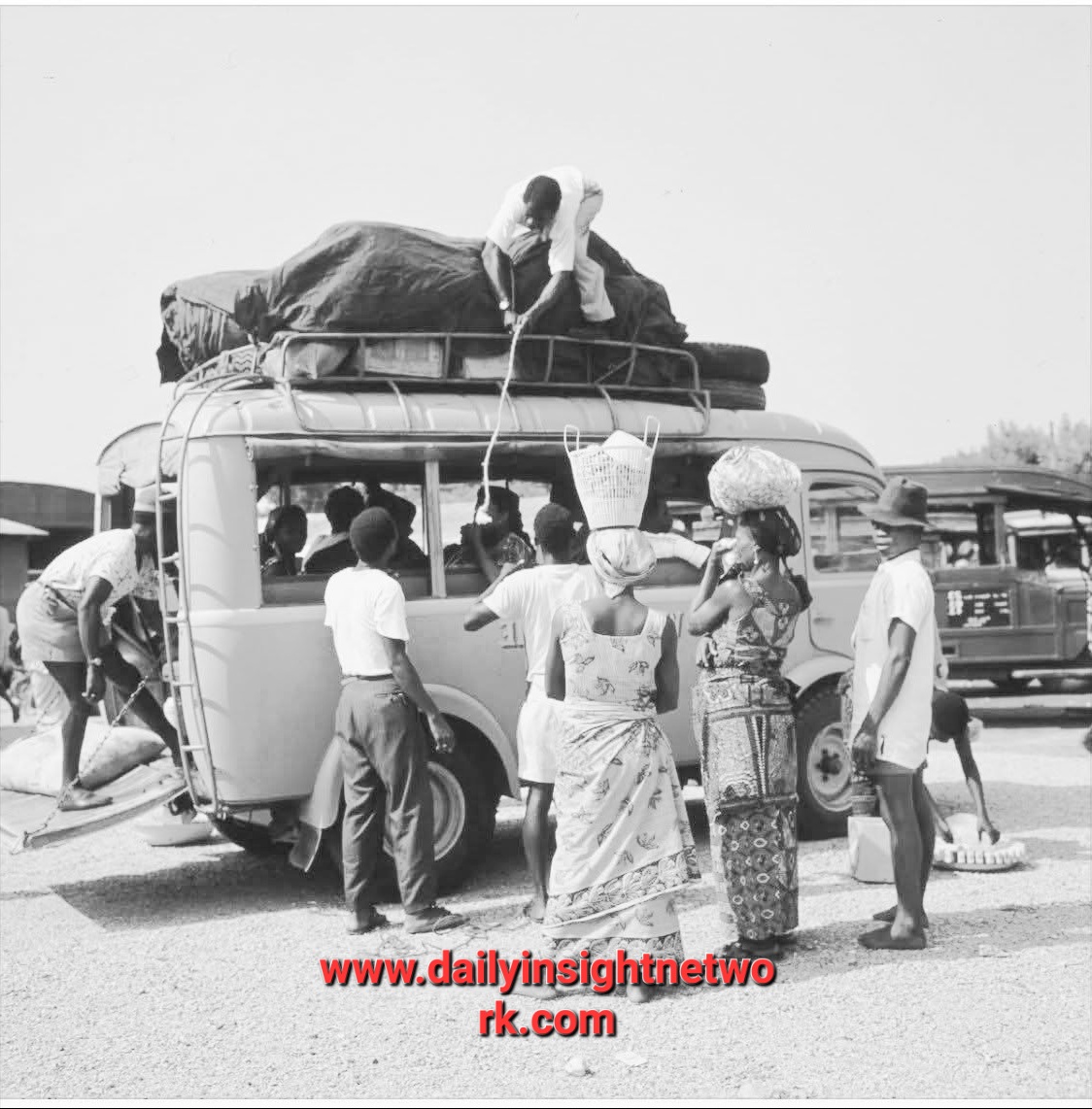
Transportation plays an important role in Ghana’s economy. It helps in economic activities by connecting one region to another. A good transportation system helps to boost tourism in the country. It also helps farmers to send their products to the market to sell. Workers and students are able to move to their workplaces and schools respectively.
Transportation means how people or goods are moved from one location to another location.
Ghana’s main transportation systems include air, water, rail, and road transport. Road transport is the one that is mainly used domestically as compared to the other modes. In spite of that, the other modes also have an essential role to play, especially when it comes to international transportation.
History of Transportation Development in Ghana
In the pre-colonial era, many people moved to places by foot. They used to carry goods on their heads from one town to another. This was the only way for them in that period to engage in trade.
Modern ways of moving goods from one place to another were introduced during the colonial period. This was less physical and faster than how people moved goods in the pre-colonial era. Railway lines were constructed. This made the movement of cocoa, timber, and gold easier and faster. These raw materials were able to be moved from the interior lands to the coastal areas (ports) to be exported. This is how modern transportation began in Ghana.
After Ghana gained independence in 1957, the government planned to expand the transportation system in the country. Roads were constructed, airports were built, and coastal or seaports were expanded. These major constructions helped improve the movement of goods both domestically and internationally. They also helped boost economic activities in the country, which supported the development of the nation.
Major Transportation Systems in Ghana
Road Transportation
This is the most widely used mode of transportation in Ghana. Roads have been constructed to link the various cities, towns, and communities, thus making movement easy for people to either engage in business activities or for sightseeing. People travel mostly in buses, taxis, motorcycles, or minibuses which are locally known as “trotro”. The most popular among them is the “trotro”. It is cheaper as compared to the others. It also operates on many routes in both short and long journeys. In Ghana, the majority of private individuals own the buses, taxis, and “trotro”. Only a few buses, such as the “ayaalolo”, are owned by the government. These buses only work within urban areas.
Rail Transportation
The main purpose of rail transport was to move heavy materials like cocoa, gold, and timber from the hinterlands to the coastal areas to be exported. Currently, Ghana faces problems with this type of transportation due to the lack of maintenance of the railways and limited expansion. This type of transportation is faster than road transport.
Air Transportation
Air transport is the fastest means of transportation when compared to road, rail, and water transport. It links one country to another and helps improve international trade among countries. Ghana has two major international airports: Accra International Airport and Nana Agyemang Prempeh I Airport. The other local ones include Sunyani, Tamale, and Takoradi airports.
Water Transportation
Ghana has two major seaports: Tema and Takoradi ports. The Tema Port is the largest. These ports help to import and export goods. Water transport is the slowest mode of transportation, and many people do not use it. In Ghana, people use boats and ferries on the Lake Volta to transport goods and people.
Importance of Transportation in Ghana
1. Transportation helps facilitate the easy movement of goods. This promotes trade and commerce in the country.
2. It helps people to travel for education and healthcare.
3. It brings about employment. Through transportation, many people are employed as drivers and conductors (mates).
4. It also promotes tourism. People easily visit tourist sites as movement to those places is now easier and faster.
5. It serves as a source of revenue for the government. Drivers pay tolls and taxes. These taxes become revenue for the government.
6. It brings about national unity. Transportation has helped connect regions. People now travel to different regions to stay and work, thereby strengthening interactions between people from different backgrounds.
Challenges of Transportation in Ghana
The transportation system in Ghana faces many challenges. Some of them include:
1. Poor road conditions. The roads are not maintained properly. This has led to frequent road accidents which have claimed the lives of many people.
2. Heavy traffic: especially in urban areas. This often leads to delays in movement and an increase in transportation costs.
3. During festivities and “rush hours,” drivers charge unapproved fares.
Despite the challenges, the government has continuously initiated plans to solve them. New roads are being constructed, and existing roads are being expanded to eliminate traffic congestion and reduce accidents. Currently, the new expansion of roads includes the Ofankor Barrier to Pokuase and the Budumburam to Winneba Junction roads.